- Kudos to Anatolian Civilisations Museum, a cultural sanctuary filled with a unique collection of rare prehistoric and ancient artefacts, curated to provide an engaging and educational experience. Things to improve: lights were too dimmed, it was hard to read most labels, and more alertness is needed by security staff to deter people from touching priceless artefacts with their greasy hands. For a reason unknown to me people love to take selfies with an Assyrian king than Eiffel Tower, putting their arm around lifeless stone shoulders of the king.
- Ankara Citadel and surrounding historical areas have improved significantly as touristic destinations compared to ten years ago. Most of the old houses have been restored, some have questionable authenticity though - I saw a plaster Russian bear sculpture (more like an arctic bear) in front of a hotel to attract Russian tourists, who were sadly nonexistent due to the war in Ukraine.
- For foreign tourists taxis are reliable and recommended form of commuting in Ankara. Taking taxis from designated stops where they queue up next to a “taxi” sign is encouraged. Catching taxis casually may be less desirable as those drivers usually are freelancers who look and act like Mexican banditos. Their horses, or rather vehicles, may be less comfortable and less hygienic.
- Most taxi doors will not hold when you open them, the door will close on your knee and crush it when you are getting out with your bag. This is probably part of the fun while visiting a Turkish metropolis.
- In any case make sure the taxi driver resets the starting price before driving. Due to high inflation rate don’t be alarmed if the opening price in the afternoon is more expensive than in the morning, either way having a dispute with a taxi driver - any driver - is not recommended.
- Taximeters are installed either on the mirror or on a box near the gear. If you are sitting next to the driver use your seatbelt. In the back, seatbelts are optional, the chances are they won’t even work.
- Adherence to traffic rules on highways is good, apart from momentary speeding well above speed limits. Drivers mostly obey traffic lights in big junctions. Pedestrians who want to use crossings however should not assume anything and double check vehicles that may override rules. Apparently some drivers have peculiar fun from scaring people crossing.
- Traffic in Ankara is chaotic in side streets, drivers - mostly taxi drivers - can be vulgar and aggressive, harassing people crossing the street, elderly and sick included (the fun doubles.) Pedestrians are second class citizens, just like slaves in Ancient Greek cities. Most drivers do not honour pedestrian crossings without traffic lights and some show needlessly aggressive behaviour towards pedestrians, as if they are Martians who attacked our planet.
- Most inner city pavements are poorly constructed. Walking becomes acrobatics around obstacles, sudden ends, parked vehicles, holes big enough to swallow bears and other mammals, invisible dents, hazardous material and dirt.
- On some pavements you will find yellow coloured hard plastic strips in the middle along the pavement with circular or rectangular dents high enough to trip you - they are rumoured to be designed for blind by a sick person who doesn’t like disabled citizens. Blind people in Turkey are smarter than people who can see, they have to be, otherwise they would be dead. Therefore you wouldn’t see a single blind person using yellow strips designed for blind, in fact you don’t see them at all. Sometimes on pavements, scooters, even motorcycles suddenly appear out of nowhere. You need to be very careful while walking - you shouldn’t assume pavements are safe. You need to unlearn walking, a Homo Sapiens trait evolved 200,000 years ago.
- Ankara has air pollution problem even in summertime. A thick layer of exhaust fumes and dust hang over the bowl shaped city most days.
- There are still too many smokers, smoking in public spaces. Pubs allow smoking in outdoor sections. Some restaurants and cafes have two sections for smokers and nonsmokers. If you are a non-smoker or a person suffering from bronchitis, asthma or related respiratory problems, you may be susceptible to unhealthy effects of passive smoking, pollution and dust.
- Tap water is not drinkable unless you want to end up in the nearest hospital. For casual everyday consumption you need to buy water in pet bottles. It is very rare though you would find recycling bins for pet bottles.
- There seems to be more visible plastic pollution than the developed world. Plastic bags are widely in use across all sorts of shops. Garbage collection bins on streets are filled with mixed trash including plastic, paper and metals. There are some bins designated to collect glass, but it seems people don’t use them. In the evening casual garbage sorters - rumoured to be Syrian refugees - come by with their carts, leaning inside the bins, legs in the air, tearing up bags and trashing around, in search for cans, bottles and paper. This manual process may be seen as effective part of recycling, providing income to disadvantaged but it is unhygienic causing dirt and unpleasant odour around bins. In general streets in Ankara are dirtier compared to Sydney.
- Stray dogs are a problem. They are populous in fringe suburbs like Yıldız where they come from the wild and roam. From the plastic labels stapled on their ears, I gather some of these dogs are immunised by municipalities and casually looked after by public. Most of them look frail and hungry. It is quite distressing to see animals in this state. They move about in packs in cooler weather or at nighttime, at times in threatening ways. I was told they mauled two citizens walking in the Seymenler Park at night. So don’t assume they are harmless.
- There are plenty of restaurants, cafes, pubs and eateries in side streets. Alcohol may not be sold or served within 100 meters of mosques - if you’re that near to a mosque you will suffer from sleep deprivation, so you wouldn’t want to drink anyway.
- 10% tip is customary and recommended. I see it a sensible way to support economic hardship endured my majority. If I am really happy I’d go above 10%.
- POS terminals are widely available, majority of the time they work reliably. As in any parts of the world, do not leave your credit card unattended and do not share or show your pin. You must be careful while using ATMs, as beggars or pickpockets can be wandering nearby, so as Kleenex tissue sellers.
- Using cash in taxis is cheaper, they would overcharge, if you use POS. There are foreign exchange shops with red signs in crowded streets, they too provide good rate, not as good as credit card foreign exchange rate though. People who work in foreign exchange bureaus act like princes and princesses. They don’t smile, they don’t even look at you. Don’t get offended. They are like that.
- There are many coffee shops in Kavaklıdere district serving Italian coffee types, cappuccino, latte, espresso and the like. The quality of coffee served is poor most of the time. If you are an Aussie (the nation of coffee snobs) you will likely get frustrated. There are three problems, the coffee is not hot enough, they don’t know how to make good milk froth, and the coffee flavour left on your palate is so weak that you’d think you have covid-19. Cappuccino and latte are hopeless. The froth looks like carpet cleaning foam with a touch of baby shit, tastes like sour canned milk powder from 1945, mixed with a touch of gunpowder, found in a Nazi bunker in Normandy - I am telling you it will really put you off, so much so that you will wonder if you are teleported to a different planet. Your best chance of having a decent cup of coffee is by ordering espresso or Turkish coffee, even so the chances are fifty fifty.
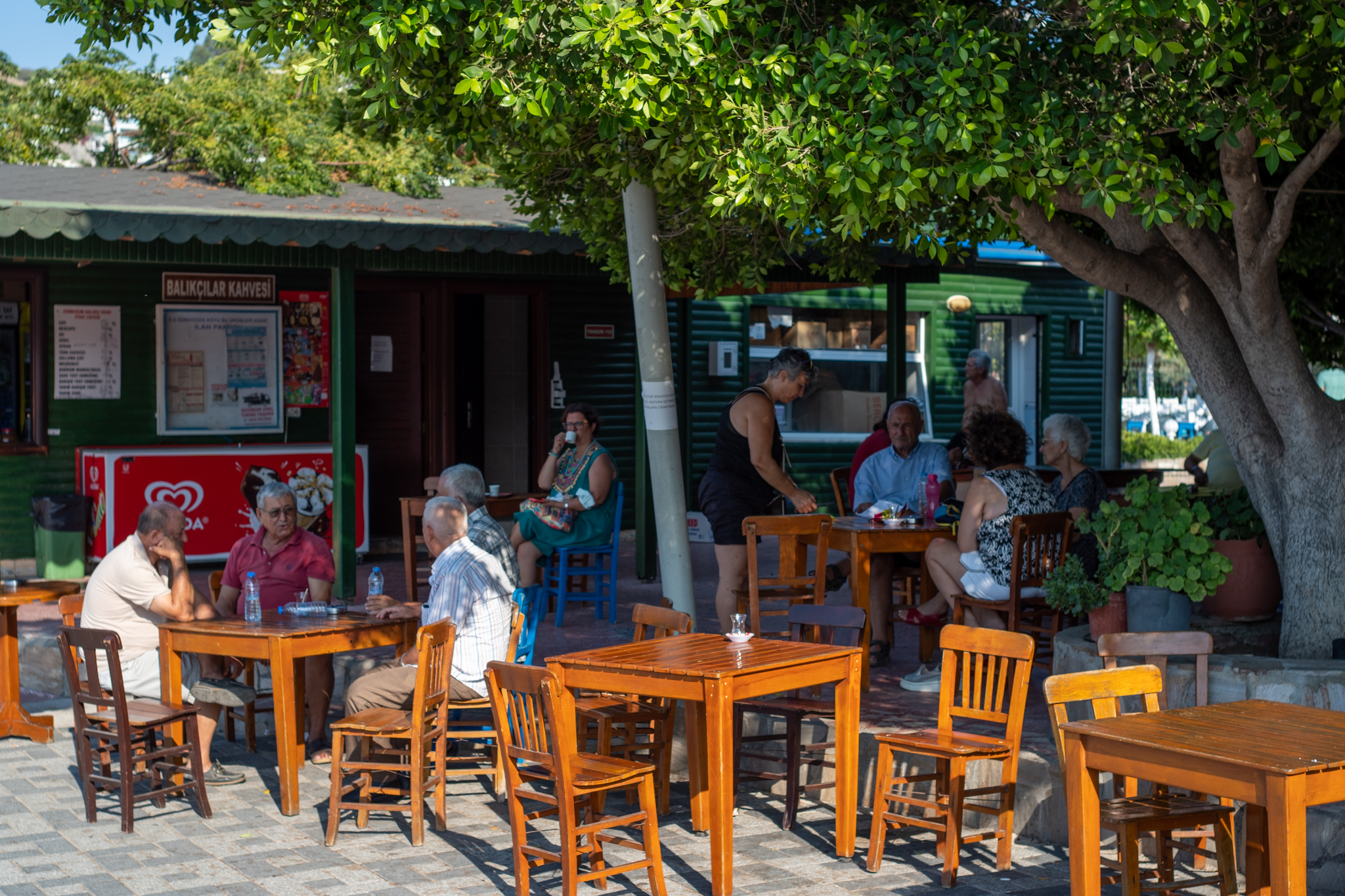
- In cafes, pubs and restaurants you will be greeted by an army of waiters. There are so many waiters that you feel ambushed by an endless North Korean army division - as soon as you tackle one, two more appear from the bush, jumping on your neck with a shriek in Korean. Waiters watch you all the time, basically checking if your plate or glass is empty, and they walk around to attack you as soon as they see an opportunity - when your plate or glass is empty. You need to think strategically and find a table and a sitting orientation to minimise waiter harassment, otherwise instead of eating or drinking properly by your mouth, you will feel like food and drinks shoved in the wrong end. Ironically Turkish waiters disappear when you need them most, and that is when you want to ask the bill.
- In contrast waiters in Australia are a mystery. They exist in spirit - they are completely invisible. Even if in rare cases you see them, they demand a ceremony equivalent to the King of England’s coronation. They do everything in their power to avoid eye contact, just like the King of England.
- In summertime some restaurants, pubs and cafes open outdoors sections with limited air flow due to shades and partitions around the area. If you sit in the middle or at the back, you will be smoked to death like cockroaches, as people chain smoke just like Humphrey Bogart did in Casablanca. If you sit at the pavement edge, you will be harassed by beggars and Kleenex sellers. Don’t be tempted to pay them. They are professionals, experts in exploiting your sense of pity - they probably make better money than waiters most of whom are university graduates on minimum wage.